Are you considering a career at sea or already navigating the waters as a captain? You’re probably wondering what it takes to get your captains license. The United States Coast Guard (USCG) issues various licenses, but what are they, and which one is right for you?
The USCG offers different categories of licenses based on the type of vessel, its size, and where it operates. Understanding these categories is crucial for your career as a captain, as they determine your eligibility for various jobs and the kind of vessels you can command.
As you explore your options, you’ll need to know about the requirements, the process of upgrading your license, and the job opportunities available to you. This article will guide you through the different types of captains licenses, helping you make informed decisions about your maritime career.
Key Takeaways
- Understanding the different categories of USCG captains licenses.
- Eligibility criteria for obtaining a captains license.
- The process of upgrading your captains license.
- Job opportunities available with different types of licenses.
- Requirements for various maritime careers.
The Importance of USCG Captains Licenses
For those in the maritime sector, holding a valid USCG captains license is not just a legal requirement, but a mark of professionalism. As you navigate your career in the maritime industry, understanding the significance of this license is crucial.
The USCG captains license is a credential that signifies your competence and adherence to the strict standards set by the U.S. Coast Guard. It’s a critical asset for anyone looking to operate commercial vessels, whether for passenger transport, cargo shipping, or other maritime activities.
Legal Requirements for Operating Commercial Vessels
Operating a commercial vessel without the appropriate USCG captains license can result in severe penalties, including fines and potential imprisonment. The U.S. Coast Guard mandates that anyone operating a commercial vessel must hold a valid license that corresponds to the type and size of the vessel they are operating.
To comply with these regulations, it’s essential to understand the different types of licenses available and the specific requirements for each. This includes knowing the tonnage limits, the number of passengers you are authorized to carry, and any geographic limitations.
| Vessel Type | License Requirement | Tonnage Limit |
|---|---|---|
| Passenger Vessel | OUPV (Six-Pack) License | Up to 100 Gross Tons |
| Cargo Ship | Master’s License | Over 100 Gross Tons |
| Fishing Vessel | Operator License | Varies by State |
Career Advancement Opportunities
Having a USCG captains license opens up numerous career advancement opportunities in the maritime industry. With this credential, you can take on more responsibilities, such as commanding larger vessels or managing maritime operations.
Moreover, holding a USCG captains license can significantly enhance your earning potential. Captains with the appropriate licenses are in high demand, and their services are often compensated at a premium.
“The best way to get started is to quit talking and begin doing.” – Walt Disney
In the context of maritime careers, obtaining a USCG captains license is a proactive step towards advancing your career and achieving your professional goals.
Safety and Liability Considerations
Safety is a paramount concern in the maritime industry, and holding a USCG captains license is directly linked to ensuring the safety of passengers, crew, and cargo. The licensing process involves rigorous training and examination, ensuring that captains are equipped to handle emergency situations and adhere to safety protocols.
Furthermore, having the appropriate license can mitigate liability in the event of an accident or incident. By demonstrating compliance with USCG regulations, you can reduce the risk of legal repercussions and protect your professional reputation.
In conclusion, a USCG captains license is not just a legal necessity; it’s a cornerstone of professionalism in the maritime industry. It offers a pathway to career advancement, ensures compliance with safety regulations, and enhances your credibility as a maritime professional.
OUPV (Six-Pack) License: The Gateway to Professional Boating
If you’re looking to start a career in professional boating, understanding the OUPV (Six-Pack) License is crucial. This license is a stepping stone for many maritime professionals, allowing them to operate commercial vessels with certain limitations.
What Is an OUPV 6-Pack License?
An OUPV (Operator of Uninspected Passenger Vessels) 6-Pack License, commonly referred to as a “Six-Pack” License, is issued by the United States Coast Guard (USCG) to operators of uninspected passenger vessels. This license permits the holder to operate vessels that carry up to six paying passengers. It’s an essential credential for those looking to work in the charter fishing, tour boat, or small passenger vessel industries.
As noted by maritime experts, “The OUPV license is a critical credential for anyone looking to operate commercial vessels in a professional capacity.”
“The OUPV license opens doors to various opportunities in the maritime industry, from charter fishing to passenger tours.”
Qualification Requirements
To qualify for an OUPV 6-Pack License, you must meet specific requirements set by the USCG. These include:
- Age: You must be at least 18 years old.
- Sea Service: You need to have a certain amount of sea time, typically 360 days (with at least 90 days in the last three years).
- Training: Completion of a USCG-approved course, such as those covering navigation, safety equipment, and regulations.
- Examination: Passing a written examination that tests your knowledge of maritime laws, navigation rules, and safety procedures.
| Requirement | Description |
|---|---|
| Age | At least 18 years old |
| Sea Service | 360 days, with 90 days in the last 3 years |
| Training | USCG-approved courses |
| Examination | Written exam on maritime laws, navigation, and safety |
Operational Limitations and Privileges
The OUPV 6-Pack License comes with specific operational limitations and privileges. While it allows you to operate uninspected passenger vessels, there are restrictions on the number of passengers and the type of vessels you can operate. For instance, you’re limited to operating vessels that are not inspected by the USCG and can carry no more than six paying passengers.
Understanding these limitations is crucial for operating within the legal boundaries of your license. As maritime law experts emphasize, “Knowing the operational limitations of your OUPV 6-Pack License is key to avoiding legal issues and ensuring safe operations.”
In summary, the OUPV (Six-Pack) License is a vital credential for those entering the professional boating industry. By understanding its requirements and limitations, you can navigate your maritime career with confidence.
Master’s License: Expanding Your Maritime Authority
A Master’s license represents a significant milestone in a maritime professional’s career, offering expanded authority and opportunities. As you consider advancing your career, understanding the specifics of a Master’s license is essential.
Differences Between OUPV and Master’s Licenses
The primary distinction between an OUPV (Operator of Uninspected Passenger Vessels) license and a Master’s license lies in their scope of operation and the size of the vessels they authorize you to command. An OUPV license, often referred to as a “Six-Pack” license, allows you to operate uninspected passenger vessels carrying up to six paying passengers. In contrast, a Master’s license grants you the authority to command larger, inspected vessels, potentially opening up more significant commercial opportunities.
While an OUPV license is ideal for operating smaller passenger vessels, a Master’s license is required for larger commercial vessels, making it a more comprehensive credential for those seeking to expand their maritime career.
Additional Requirements for Master’s Credentials
To obtain a Master’s license, you must meet more stringent requirements compared to an OUPV license. These include:
- Accumulating more sea service time, often with a higher proportion of time in a supervisory role.
- Completing additional training and passing more comprehensive examinations that test your knowledge of advanced navigation, safety protocols, and vessel operation.
- Fulfilling specific documentation and medical requirements.
These additional requirements reflect the increased responsibility and authority that come with a Master’s license.
Commercial Opportunities with a Master’s License
With a Master’s license, you can access a broader range of commercial opportunities in the maritime industry. This includes commanding larger passenger vessels, cargo ships, or even serving as a captain on commercial shipping vessels.
The enhanced credentials provided by a Master’s license can significantly boost your career prospects, potentially leading to higher-paying positions and greater professional satisfaction.
By understanding the differences between OUPV and Master’s licenses, the additional requirements for obtaining a Master’s license, and the commercial opportunities available, you can make informed decisions about your maritime career path.
Common Types of Captains License by Tonnage
The United States Coast Guard (USCG) issues various captains licenses categorized by tonnage, each with its own set of requirements and privileges. Understanding these different types is essential for maritime professionals looking to advance their careers or operate commercial vessels.
25 Ton Master’s License
The 25 Ton Master’s License is a foundational credential for many maritime professionals. It allows individuals to operate vessels up to 25 gross tons in domestic waters. This license is ideal for those working on smaller commercial vessels, such as tour boats or fishing charters.
Key privileges: Operate vessels up to 25 gross tons, limited to domestic waters.
50 Ton Master’s License
With a 50 Ton Master’s License, captains can operate vessels up to 50 gross tons. This license is a step up from the 25 Ton credential and offers more career opportunities, including commanding larger tour boats or commercial fishing vessels.
Career advancement: Enhanced opportunities for commanding larger vessels.
100 Ton Master’s License
The 100 Ton Master’s License is a significant credential that allows captains to operate vessels up to 100 gross tons. This license is required for many commercial shipping operations and offers substantial career advancement opportunities.
Operational capabilities: Command vessels up to 100 gross tons, suitable for a wide range of commercial operations.
200 Ton and Above Master’s License
For those looking to operate the largest commercial vessels, a 200 Ton and Above Master’s License is required. This credential offers the highest level of authority for maritime professionals, enabling them to command large commercial ships and vessels.
Highest authority: Operate large commercial vessels with tonnage above 200 gross tons.
In conclusion, the type of captain’s license required is directly related to the tonnage of the vessel being operated. By understanding the different types of licenses available, maritime professionals can choose the right credential for their career goals and operational needs.
Geographic Endorsements for Captain’s Licenses
As you navigate the process of obtaining a captain’s license, it’s essential to consider the geographic endorsements that apply to your career goals. Geographic endorsements are a critical component of your USCG captain’s license, determining the waters you are authorized to operate in.
Inland Waters Limitations
The inland waters endorsement restricts your operations to lakes, rivers, and bays, typically within state boundaries. This endorsement is ideal for those who plan to work on inland waterways, such as operating tour boats or ferries on lakes and rivers.
Near Coastal Operations (Up to 200 Miles)
Near coastal operations allow you to captain vessels within 200 miles of the coastline. This endorsement is suitable for offshore operations, including fishing charters and cargo transport along the coast.
To give you a better understanding, here’s a comparison of the different endorsements and their operational limits:
| Endorsement Type | Operational Area |
|---|---|
| Inland Waters | Lakes, rivers, and bays within state boundaries |
| Near Coastal | Within 200 miles of the coastline |
| Great Lakes | Great Lakes and connecting waters |
| Oceans | Open ocean, worldwide |
Great Lakes and Western Rivers Specific Requirements
The Great Lakes endorsement is required for operating on the Great Lakes and their connecting waters. This requires additional knowledge and experience due to the unique conditions of these large bodies of water.
“The Great Lakes are known for their unpredictable weather and strong currents, making the Great Lakes endorsement a valuable credential for captains who wish to operate in these challenging conditions.” –
Oceans Endorsement
The oceans endorsement provides the most extensive operational authority, allowing you to captain vessels on the open ocean, worldwide. This is the most versatile endorsement, opening up global maritime career opportunities.
To illustrate the differences, consider the following:
- Inland waters endorsement is limited to specific geographic areas within the United States.
- Near coastal endorsement expands your operational area to within 200 miles of the U.S. coastline.
- Great Lakes endorsement is specialized for the Great Lakes.
- Oceans endorsement offers global operational capabilities.
Understanding these endorsements is crucial for planning your maritime career. Each endorsement has its unique requirements and limitations, and choosing the right one depends on your career aspirations and the type of operations you wish to conduct.
Specialized Endorsements to Enhance Your Credentials
As you advance in your maritime career, obtaining specialized endorsements can significantly enhance your credentials. These endorsements not only broaden your skill set but also increase your versatility and value in the maritime industry.
Commercial Assistance Towing
Commercial Assistance Towing endorsement is crucial for captains who wish to engage in towing operations. This endorsement requires specific training and experience, demonstrating your ability to safely conduct towing operations.
- Enhances your capability to perform complex towing operations
- Increases your employability in the towing industry
- Demonstrates your expertise in handling towing vessels
Auxiliary Sail Endorsement
The Auxiliary Sail Endorsement is designed for captains who operate vessels with auxiliary sail power. This endorsement showcases your ability to manage and maneuver sail-assisted vessels effectively.
Benefits include:
- Improved sailing skills and knowledge
- Enhanced career opportunities in the sailing industry
- Increased versatility in operating different types of vessels
Radar Observer Certification
Radar Observer Certification is essential for navigating in low visibility conditions. This certification demonstrates your proficiency in using radar equipment to avoid collisions and navigate safely.
The importance of Radar Observer Certification cannot be overstated, as it significantly enhances your ability to navigate safely in various conditions.
STCW Endorsements for International Operations
STCW (Standards of Training, Certification and Watchkeeping) Endorsements are mandatory for captains operating internationally. These endorsements ensure that you meet global standards for maritime safety and security.
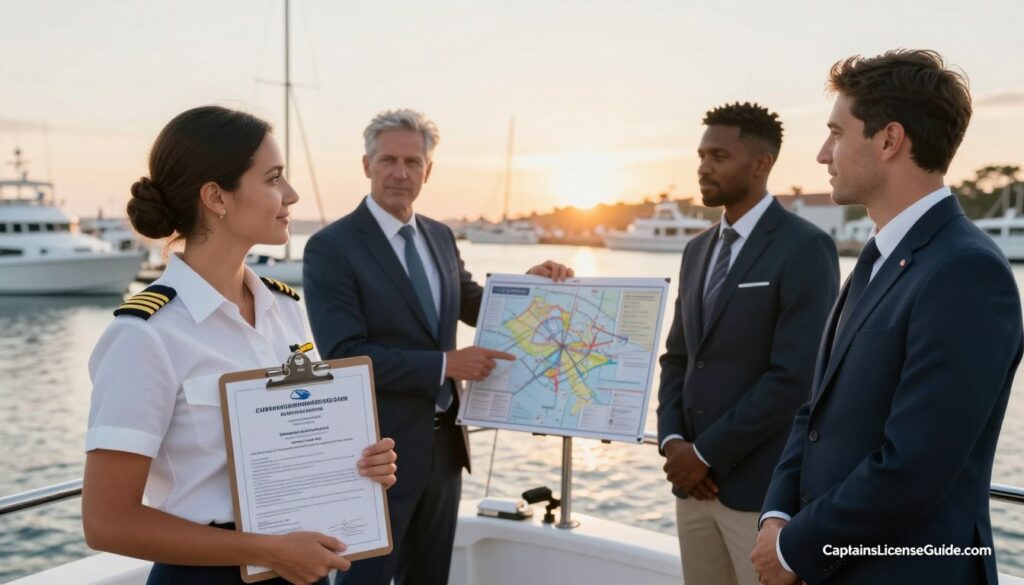
By obtaining STCW Endorsements, you can expand your career opportunities globally and comply with international maritime regulations.
The Complete Application Process for USCG Captains License
Applying for a USCG Captains License is a multi-step process that requires careful preparation and attention to detail. As you embark on this journey, it’s crucial to understand the various components involved in the application process to ensure a smooth and successful experience.
Required Documentation
To begin, you’ll need to gather the necessary documentation to support your application. This includes:
- Proof of identity, such as a valid passport or driver’s license
- Proof of citizenship, such as a birth certificate or naturalization certificate
- Sea service documentation, including letters of recommendation and sea service logs
- Training certificates, such as those for first aid, CPR, and firefighting
- Medical certificates, including a valid medical examination report
Ensure that all documents are up-to-date and meet the USCG’s specific requirements.
Background Checks and Drug Testing
As part of the application process, you’ll be required to undergo a background check and drug testing. The USCG uses these checks to ensure that applicants meet the necessary safety and security standards.
The background check will involve:
- Submitting fingerprints for a national and international criminal history check
- Providing information about any past convictions or pending charges
Drug testing is also mandatory, and you’ll need to pass a drug test conducted by a USCG-approved laboratory.
Application Submission and Timeline
Once you’ve gathered all the required documentation and completed the background check and drug testing, you can submit your application to the USCG.
The application submission process typically involves:
- Filing your application online through the USCG’s online portal
- Paying the required fees, which may include application fees, examination fees, and licensing fees
- Submitting your supporting documentation, either electronically or by mail
The timeline for processing your application can vary depending on several factors, including the complexity of your application and the workload of the USCG.
To ensure a timely and successful application process, it’s essential to carefully review the USCG’s requirements and guidelines. By understanding what’s involved and preparing accordingly, you can navigate the process with confidence.
License Examination: What to Expect
As you prepare for your USCG Captain’s License, understanding the license examination process is crucial. The examination is a comprehensive assessment that evaluates your knowledge, skills, and experience in operating commercial vessels.
Examination Topics and Structure
The license examination covers a wide range of topics related to maritime operations, including navigation, safety procedures, weather forecasting, and regulations. The exam is typically divided into multiple sections, each focusing on a specific area of knowledge.
Key examination topics include:
- Navigation rules and regulations
- Ship handling and maneuvering
- Weather forecasting and observation
- Safety equipment and emergency procedures
- Maritime law and regulations
Study Resources and Preparation Courses
To prepare for the examination, you can utilize various study resources and preparation courses. These may include:
- USCG-approved training programs
- Online study guides and practice exams
- Maritime academies and training centers
- Study groups and discussion forums
It’s essential to choose study materials that are relevant to your specific license category and endorsement.
Testing Locations and Procedures
The USCG conducts license examinations at various testing locations throughout the United States. These locations may include:
- USCG Regional Examination Centers
- Maritime training facilities
- Other designated testing sites
Before scheduling your exam, ensure you understand the testing procedures and required documentation.
Retesting Policies
If you fail to pass the examination, you can reapply for retesting after a specified period. The retesting policies vary depending on the type of license and the reason for the initial failure.
It’s crucial to review your exam results carefully and focus your studying on areas where you need improvement.
License Renewal and Maintenance Requirements
Maintaining a valid captain’s license requires adherence to specific renewal and maintenance requirements set by the USCG. As a captain, it’s crucial to stay informed about these requirements to avoid any lapses in your licensure.
Renewal Timeline and Procedures
The renewal process for a captain’s license typically begins one year before the license expires. You must submit your renewal application to the USCG, ensuring it is received before your current license expires.
The application process involves:
- Filling out the appropriate renewal application form.
- Providing documentation of sea service.
- Completing any required continuing education courses.
- Undergoing a physical examination if required.
Continuing Education Requirements
Continuing education is a vital component of maintaining your captain’s license. The USCG mandates that you complete specific courses to stay updated on maritime regulations, safety procedures, and other relevant topics.
Some of the courses you may need to complete include:
- Drug and Alcohol Awareness.
- First Aid and CPR.
- Radar Observer Training.
- STCW (Standards of Training, Certification, and Watchkeeping) courses.
Sea Service Requirements for Renewal
To renew your captain’s license, you must provide documentation of your sea service. This typically involves submitting a Detailed Sea Service Letter that outlines your time on the water, including the type of vessel and your role.
| License Type | Required Sea Service |
|---|---|
| OUPV (Six-Pack) | 360 days in the last 5 years |
| Master’s License | Varies based on tonnage and route |
Medical Recertification
Medical recertification is another critical aspect of maintaining your captain’s license. You must undergo a physical examination by a USCG-approved physician to ensure you are fit to operate a commercial vessel.
The medical certificate must be valid for the duration of your license. Ensure you schedule your medical examination well in advance of your license renewal to avoid any delays.
Career Paths and Opportunities with Different Types of Captains License
With various captains licenses available, you can unlock a range of career paths in the maritime industry. The type of license you hold not only determines your legal capabilities but also opens up different professional opportunities.
Charter Fishing Operations
An OUPV (Six-Pack) license is particularly valuable for those interested in charter fishing operations. This license allows you to operate a vessel carrying up to six paying passengers. Charter fishing is a lucrative business, especially in coastal areas with abundant fish populations.
Key aspects of charter fishing operations include:
- Understanding local fishing regulations
- Managing a crew and ensuring customer satisfaction
- Maintaining safety standards
- Marketing your services to attract clients
Passenger Vessel Operations
For those with a Master’s license, operating passenger vessels for tours, cruises, or ferries is a viable career path. This role requires not only navigation skills but also excellent customer service and safety management.
Passenger vessel operations involve:
- Ensuring compliance with safety regulations
- Providing exceptional customer service
- Managing crew responsibilities
- Handling emergency situations
Commercial Shipping Opportunities
A higher tonnage Master’s license can lead to opportunities in commercial shipping. This includes transporting goods across domestic or international waters.
| License Type | Career Opportunities | Responsibilities |
|---|---|---|
| OUPV (Six-Pack) | Charter Fishing, Small Passenger Vessels | Customer service, Safety management, Navigation |
| Master’s License (Higher Tonnage) | Commercial Shipping, Large Passenger Vessels | Crew management, Cargo management, Compliance with regulations |
Yacht Delivery and Management
Yacht delivery is another career path, especially for those with an OUPV license. This involves delivering yachts from one location to another, often across long distances.
Yacht delivery and management include:
- Navigation planning
- Crew coordination
- Maintenance and upkeep of the yacht
- Client communication
In conclusion, the type of captain’s license you hold can significantly influence your career opportunities in the maritime industry. By understanding the different career paths available, you can make informed decisions about your professional future.
Conclusion: Selecting the Right Captain’s License for Your Maritime Goals
As you navigate your maritime career, choosing the correct Captain’s License is crucial. The type of license you need depends on your career aspirations, the type of vessel you wish to operate, and the waters you plan to navigate.
A Captain’s License, also known as a masters license or captains license, is a credential that validates your ability to command a commercial vessel. With various types of licenses available, it’s essential to select the one that aligns with your goals.
Whether you’re interested in operating a charter fishing boat, managing passenger vessels, or commanding commercial shipping vessels, having the right license is vital. Consider your options carefully and pursue the license that best fits your career aspirations.
By understanding the different types of Captain’s Licenses and their requirements, you can make informed decisions about your maritime career. This knowledge will help you achieve your goals and succeed in the maritime industry.